On April 27, the research icebreaker Xuelong 2 successfully completed the 2026 autumn joint expedition in Prydz Bay, Antarctica. The joint cruise brought together 97 polar researchers from 19 scientific institutions across six countries, including China, Australia, the United States, South Korea, Belgium, and India. It also marked China’s first comprehensive autumn survey of the Southern Ocean in the Prydz Bay region. Dr. Yongji Huang, a member of the research team led by Academician Si Zhang and Professor Jingchun Feng at Guangzhou Marine Laboratory, participated in the expedition and successfully carried out underway monitoring of sea–air methane fluxes in the Southern Ocean and adjacent Antarctic waters.
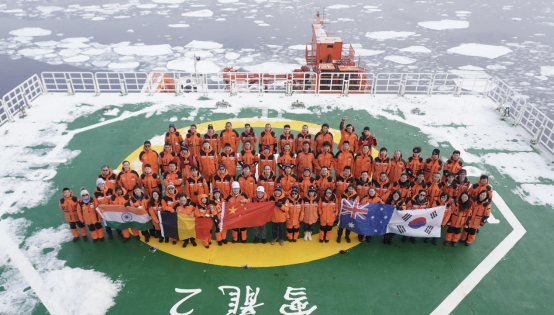
Xuelong 2 completes the 2026 autumn joint expedition in Prydz Bay, Antarctica
Methane is a highly potent greenhouse gas, with a global warming potential over a 100-year timescale far exceeding that of carbon dioxide. Polar oceans are regarded as potentially sensitive regions for methane release. The Southern Ocean contains abundant methane hydrates beneath the seafloor, while cold seeps serve as critical pathways for the rapid transport of seabed methane into the water column. These seep systems can directly connect geological carbon reservoirs to the ocean–atmosphere exchange interface, creating strong localized methane emission sources. Therefore, obtaining methane air–sea flux data from the Southern Ocean is of great importance for assessing polar carbon cycling and associated climate feedbacks.
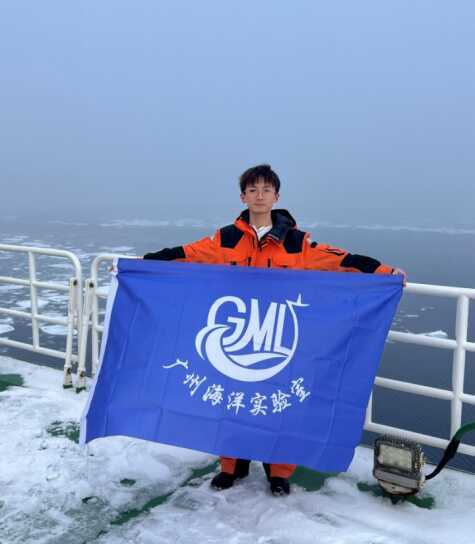
Guangzhou Marine Laboratory successfully conducts underway methane monitoring in Antarctic waters
During the expedition, Dr. Huang employed the team’s independently developed intelligent underway greenhouse gas flux monitoring system, which was integrated with the vessel’s continuous seawater circulation system. The system continuously collected atmospheric and dissolved seawater methane concentrations, together with related physicochemical water quality parameters, throughout the voyage. Coupled with meteorological observations, the system enabled high-resolution in situ calculations of methane air–sea fluxes. The survey transects covered regions of the Southern Ocean where indications of cold seep activity had previously been reported. Owing to the system’s highly sensitive real-time response capability, it is expected to detect subtle anomalies in surface methane concentrations associated with cold seep methane plumes, thereby helping quantify the actual contribution of cold seep leakage to methane air–sea fluxes. Under the challenging environmental conditions of the austral autumn, the study successfully obtained high-spatiotemporal-resolution methane air–sea flux data from Antarctic waters. These observations provide critical field-based evidence for establishing baseline assessments of polar greenhouse gas sources and sinks, as well as for understanding the variability and evolution of methane fluxes in the Antarctic marine environment.
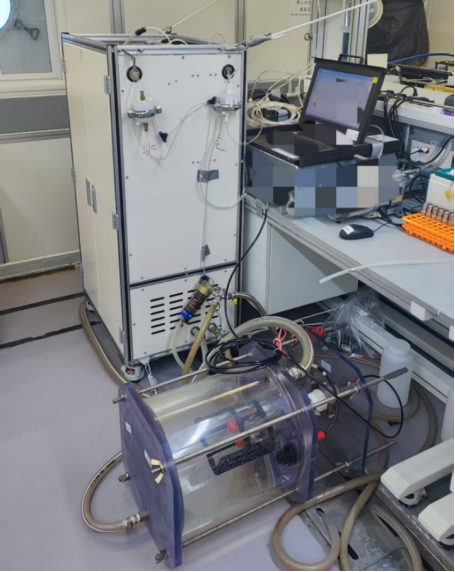
The team’s self-developed intelligent underway greenhouse gas flux monitoring system
Attachment download:
