On April 24, the Expert Seminar on the Implementation Plans for UN Endorsed Decade Programmes, hosted by the Southern Marine Science and Engineering Guangdong Laboratory (Guangzhou), concluded successfully in Guangzhou, China. The seminar focused on in-depth discussions of the implementation plans for two UN endorsed Decade programmes: CliMetS (Global Climate Impacts of Methane Seeps, endorsed under the UNESCO Ocean Decade framework) and MOCSI (Mysteries of Ocean Cold Seep Interfaces, endorsed under the UNESCO Science Decade framework).
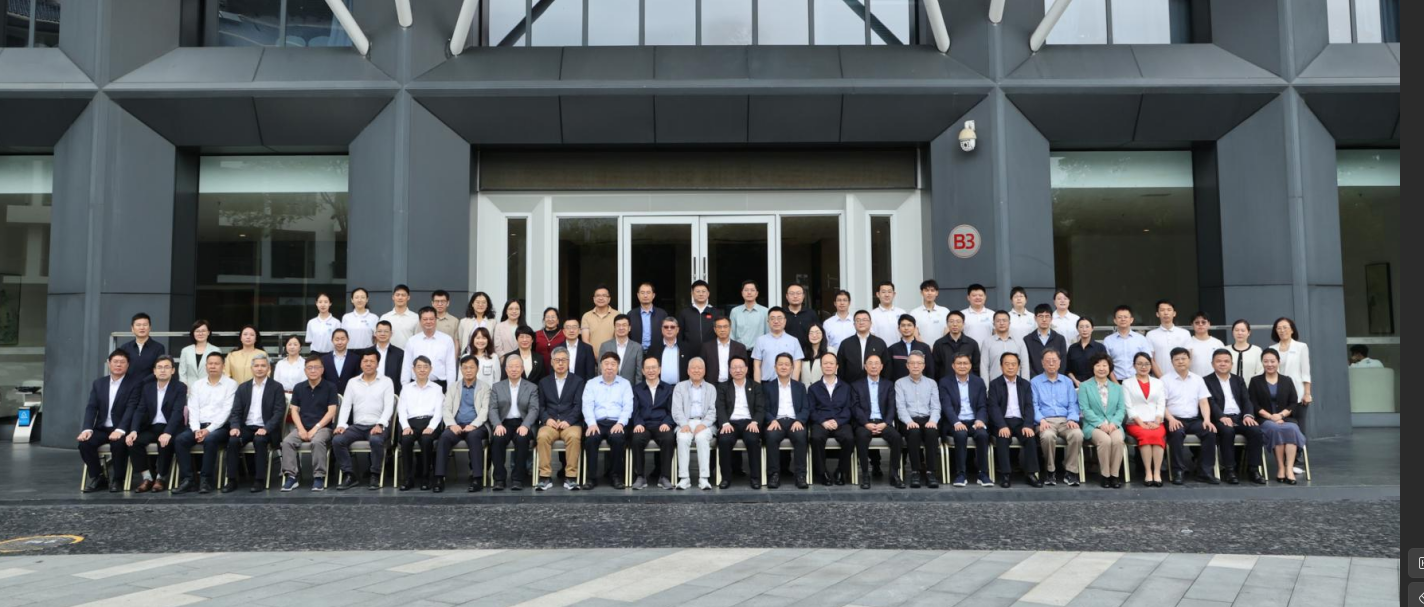
Thirteen academicians attended the meeting, including Zhu Rixiang, Wu Lixin, Fu Bojie, Li Jiabiao, Dai Minhan, Chen Dake, Zhang Si, Yang Zhifeng, Xu Yigang, Jiang Xingwei, Wang Juncheng, Da Lianglong, and Yu Zhiming. More than 70 experts, scholars, and representatives from research institutes and universities—including Laoshan Laboratory, Guangdong University of Technology, and the Hong Kong University of Science and Technology—participated in the seminar. Sun Xiang, Deputy Director of the Guangzhou Municipal Science and Technology Bureau, and Chen Jie, Director of the Agriculture and Social Affairs Division, were also in attendance. The seminar was chaired by Academician Zhu Rixiang of the Chinese Academy of Sciences.
During the thematic presentation session, Prof. Qian Peiyuan, Programme Leader of CliMetS and MOCSI, Chief Scientist of CliMetS, systematically introduced the strategic background, overall objectives, framework design, and implementation progress of the two programmes. He emphasized that CliMetS and MOCSI represent not only scientific exploration of the oceans, but also major initiatives serving global climate governance and sustainable ocean development.
Prof. Feng Jingchun, Chief Scientist of the MOCSI programme, delivered a presentation titled “Resource and Environmental Effects of Seafloor Methane Seepage,” highlighting the key scientific questions and objectives, overall approach, research content, and expected outcomes of the Science Decade programme.
During the expert consultation session, the attending academicians and experts carefully reviewed the reports and engaged in in-depth discussions. Participants unanimously agreed that the programmes have well-defined purposes, significant scientific importance, strong forward-looking visions, and international leadership potential. The successful endorsement and implementation of the two programmes mark China’s transition in seafloor cold seep research from a “follower” to a “leader.” This represents a major breakthrough in China’s participation in global ocean governance and fully demonstrates China’s growing voice and influence in international marine science and technology affairs.

Experts emphasized that the programmes will effectively serve China’s strategy of becoming a strong maritime nation, promote the building of a maritime community with a shared future and a community with a shared future for mankind. They recommended accelerating the organization and implementation of the programmes to quickly produce a number of ground-breaking achievements and public goods that carry international influence.
The seminar served as a high-level and efficient scientific consultation and strategic guidance meeting, providing clear direction for the high-quality implementation of the two programmes. Building on the momentum of the seminar, the laboratory will carefully incorporate the valuable insights and suggestions of the academicians and experts, further refine the implementation plans, accelerate the execution of the two programmes, actively build a global cooperation network, and contribute Chinese solutions to addressing global climate change, protecting marine ecological environments, and supporting China’s strategy of becoming a maritime power and achieving its “dual carbon” goals.
Attachment download:
