Recently, researchers from the Research Centre of Ecology & Environment for Coastal Area and Deep Sea at Guangzhou Marine Laboratory published a research paper titled “Diversification in ANME-1 archaea is associated with the presence of highly variable genomic hotspots” in Nature Communications. Ying-Li Zhou, Rui Lu, Zhe Chen, and Paraskevi Mara contributed equally as first authors, while Jing-Chun Feng and Si Zhang served as corresponding authors. Guangzhou Marine Laboratory is the first-affiliated institution. The study identifies highly variable genomic regions that help explain how anaerobic methanotrophic archaea of the ANME-1 clade diversify and adapt to deep-sea cold seep environments.
Cold seeps transport methane-rich fluids from the subsurface to the seafloor. In their oxygen-depleted sediments, anaerobic methanotrophic archaea and their sulfate-reducing bacterial partners perform the anaerobic oxidation of methane, consuming most of the methane before it can escape from the seabed. These microorganisms therefore form an important biological barrier in the global methane cycle. However, the mechanisms underlying their diversification and speciation have remained poorly understood because ANME archaea have not been grown in pure culture and most available genomes are incomplete or highly fragmented.
To overcome these limitations, the research team combined ultra-deep short- and long-read metagenomic sequencing with high-throughput single-cell genomics to investigate sediment layers from the Haima cold seep in the South China Sea. The team reconstructed 692 non-redundant metagenome-assembled genomes (MAGs) and 4,069 single-amplified genomes, including 130 complete circular genomes. This is the largest reported collection of circular MAGs recovered from deep-sea cold seep sediments to date. Among the high-quality ANME-1 genomes, the researchers resolved 12 species-level clades, 11 of which had not previously been reported, revealing extensive species- and strain-level diversity that short-read surveys had largely missed.
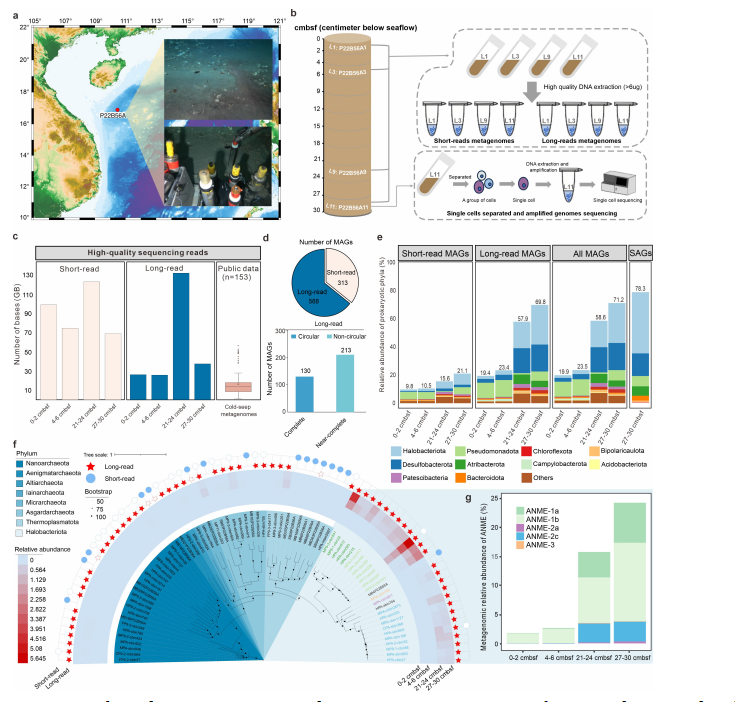
Figure 1. Ultra-deep sequencing and genome reconstruction of ANME-dominated sediments from the Haima cold seep.
Comparative and population genomic analyses further uncovered 7,119 structural variations across ANME-1 genomes. These variations were concentrated in highly variable genomic hotspots enriched in genes associated with transport systems, prokaryotic defense, and methane metabolism. Genes involved in environmental adaptation were generally under stronger positive selection than genes responsible for core energy metabolism. In particular, ABC transporters and the hicAB toxin-antitoxin system emerged as candidate drivers of genomic differentiation, highlighting how nutrient exchange, stress defense, and methane utilization may jointly shape ANME-1 diversification.

Figure 2. Microdiversity of ANME-1 species and genes under positive selection.
The team then tested ANME-1 hicAB operons through heterologous expression in Escherichia coli. Expression of HicA inhibited cell growth and, in one case, produced a lethal phenotype, whereas co-expression of the corresponding HicB protein restored normal growth. The hicAB modules also enhanced plasmid stability. These results experimentally confirm that ANME-1 hicAB genes encode functional toxin–antitoxin systems and suggest that they may help regulate population growth, preserve horizontally acquired genomic regions, and improve survival when methane availability or other environmental conditions fluctuate.
By integrating complete genome reconstruction, population genetics, and functional experiments, this study provides a detailed view of the microdiversity and evolutionary strategies of uncultured ANME-1 archaea. The findings show that structural variation and positive selection in genomic hotspots can promote niche adaptation, defense against mobile genetic elements, and speciation in dynamic cold seep habitats. The work advances our understanding of the microorganisms that regulate deep-sea methane cycling and provides a genomic foundation for future studies of their ecological functions and evolutionary history.
This study was supported by the National Natural Science Foundation of China, the National Postdoctoral Program for Innovative Talents, and the National Key R&D Program of China.
The full paper is accessible at: https://www.nature.com/articles/s41467-026-73573-4
Attachment download:
